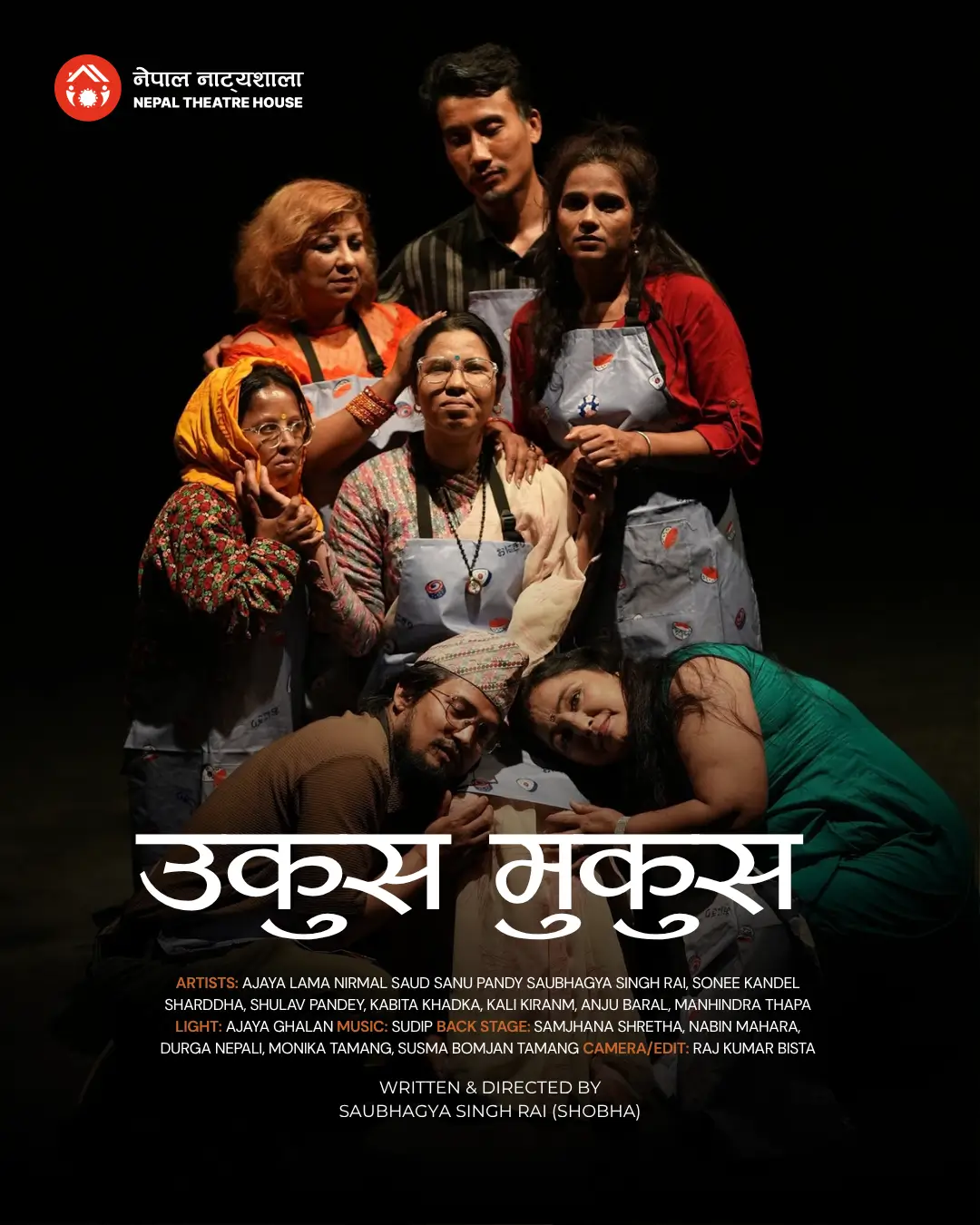
“Ukus Mukus” (उकुस मुकुस), written and directed by Saubhagya Singh Rai, is a powerful theatrical drama that explores the “internal suffocation” and profound loneliness currently impacting many Nepali households [Source 1, Source 13]. The play serves as a social commentary on the consequences of mass migration and the changing dynamics of the traditional family structure.
Key Themes and Plot Points:
- The Migration Crisis and “The Australian Dream”: A central theme is the emotional toll on parents whose children have moved abroad. The character Ajay Sir exemplifies this tragedy; despite supporting his wife’s move to Australia for education, she eventually left him for someone else, and his daughter followed her, leaving him isolated and finding solace only in his books.
- Wealth vs. Emotional Security: The play highlights a sharp irony through Putali Aama, a wealthy woman who owns three houses and significant land in Kathmandu but lacks someone to provide even a glass of water when she is sick. Her story exposes a dark reality where the elderly may fear for their safety from relatives more interested in property than care.
- The Path to Resilience: Amidst the heartbreak, the character Chanchali offers a message of hope. Running a “Job Center,” she helps connect those in need with caregivers and advocates for a shift in perspective: elderly parents must start living for themselves rather than waiting indefinitely for children who may never return.
- Seeking New Solace: The drama concludes with characters attempting to find peace through community support and new companionship. This includes Putali Aama deciding to turn her assets into a legacy by joining a social welfare home (ashram) and the potential for a second chance at love between Chanchali and Ajay Sir, despite societal pressures