
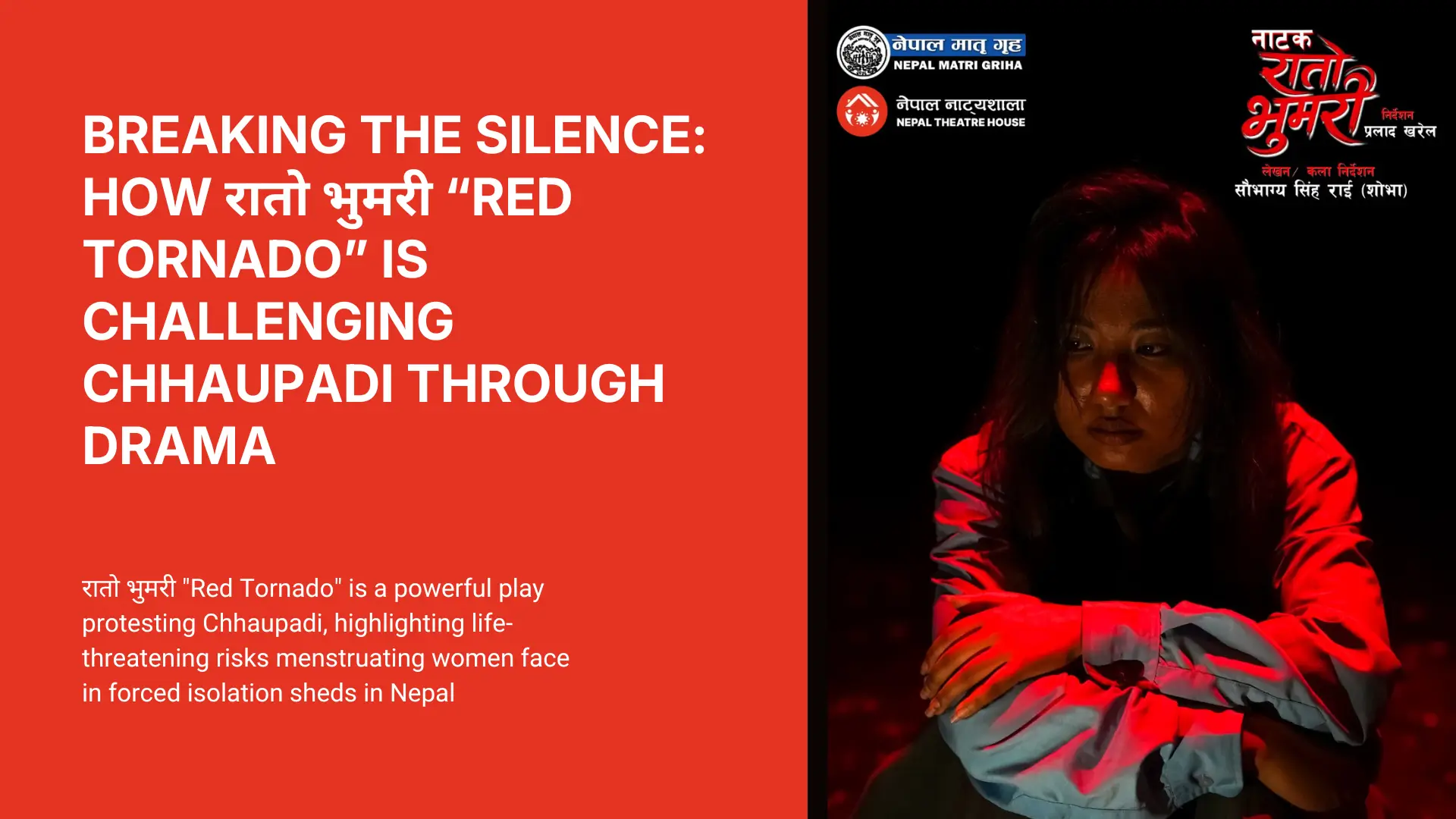
In many parts of Nepal, a natural biological process is still shrouded in dangerous superstitions. The practice of Chhaupadi, where menstruating women are banished to isolated sheds, continues to persist in the Sudurpaschim and various hilly regions of the country. Even in urban areas, deeply ingrained taboos remain, such as forbidding women from entering kitchens, touching men, looking at male family members, or visiting temples during their periods.
To confront these harmful traditions, a powerful new theatrical production titled “Rato Bhumari” has recently been staged.
Art as a Mirror to Society
The play serves as a direct protest against the life-threatening consequences of Chhaupadi. The sources highlight that women forced into these sheds face extreme risks, including fatal snake bites and the threat of sexual violence.
“Rato Bhumari” specifically targets the practice of forced isolation during a girl’s first menstruation, marking a significant step in using performing arts to advocate for menstrual rights and safety. According to actor JB DC, this is the first time a play has been specifically prepared to challenge the custom of staying in Chhau sheds during the very first period.
The Creative Team Behind the Vision
This impactful drama is a collaborative effort brought to life by dedicated artists and organizations:
- Presenters: The production is presented by Nepal Natyashala and Nepal Matri Griha.
- Writer: The script was penned by Saubhagya Singh Rai.
- Director: The play was directed by Prahlad Kharel.
- The Cast: The powerful performances are delivered by an ensemble including JB DC, Deepmala Pariyar, Ashish KC, Kiran Baby, Khushi Tamang, and Pratibha Raut.
A Call for Change
The staging of “Rato Bhumari” reminds us that while laws may exist against Chhaupadi, cultural change requires constant dialogue and creative intervention. By bringing the grim realities of the Chhau shed to the stage, the creators of “Rato Bhumari” hope to stir the public conscience and dismantle the “Rato Bhumari” of superstitions that continue to claim lives and dignity.
Through the medium of drama, these artists are not just telling a story; they are demanding a safer, more respectful future for all women in Nepal.